


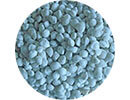
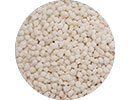
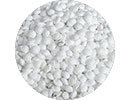
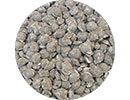
The fertilizer drum screener machine—often referred to in the industry simply as a drum screener machine—is specialized screening equipment used in the latter stages of a fertilizer processing line; it is typically installed after the cooler and before the finished product packaging stage.
Fertilizer granules emerging from the granulation, drying, and cooling processes contain a mixture of on-spec granules, fine powder, coarse lumps, and ungranulated material. The drum screener machine separates the on-spec finished product from the fines (which are returned for reprocessing) and the oversized lumps or impurities. The screened fines are conveyed back to the granulator for reprocessing, while the on-spec granules are sent to the packaging equipment for final bagging.

Fertilizer granules are fed at a steady rate into the drum's interior through the inlet; a gear motor drives the cylindrical screen drum to rotate at a low, constant speed, causing the granules to continuously tumble, turn over, and stratify within the drum.
Powder and fine fragments smaller than the screen mesh size pass through the mesh and are discharged via the fines outlet; properly sized fertilizer granules move forward inside the drum and are discharged through the intermediate outlet; meanwhile, clumps and hard impurities that cannot pass through the mesh continue moving along the drum until they are separated out at the final discharge outlet.
The combination of continuous drum rotation and periodic tapping of the screen wall by rubber hammers prevents sticky organic fertilizer raw materials from clogging the mesh, ensuring a continuous screening process. Controlling the raw material moisture content beforehand helps reduce the load on the screening equipment.
Bio-organic fertilizers, organic fertilizers derived from livestock and poultry manure, decomposed straw fertilizers, NPK compound fertilizers, humic acid fertilizers, microbial granular fertilizers, fermented oil-cake fertilizers, and soil-conditioning granules.
Screening of animal bedding, grading of composting materials, sorting of coal particles, screening of sand and gravel, and grading of granular chemical materials.
The complete organic fertilizer production process follows this sequence: raw material fermentation—crushing—mixing—granulation—drying—cooling—drum screener machine (grading)— finished product packaging.
After screening, substandard fine powder and agglomerated material are recycled back to the granulation stage for reprocessing. It is recommended to purchase the equipment as a complete set; a twin-shaft paddle mixer ensures uniform mixing of ingredients, improves the subsequent granulation rate, and reduces the volume of waste and recycled material generated during the screening process.
Standard drum screener machines on the market are designed for general sand and gravel applications and are unsuitable for the moist conditions typical of fertilizer processing; consider the following key criteria during procurement:
Prioritize models specifically modified for fertilizer by the manufacturer—ideally featuring external rubber knockers to prevent clogging—and avoid standard rotary screens that lack a self-cleaning mechanism.
Opt for a modular, detachable screen mesh design; replacing the mesh on integrated rotary screens is time-consuming and labor-intensive.
For heavy-duty models, ensure the support rollers and main shaft are thickened to prevent shaft deformation when handling heavy, moist materials over long periods.
Give preference to manufacturers that offer complete production line integration and on-site installation and commissioning services; Huaqiang Heavy Industry, for example, provides customers with one-stop services covering plant planning, equipment commissioning, and after-sales support.
Although the screening process may appear to be merely a final step in fertilizer production, it directly determines the quality and appearance of the granules, production efficiency, and the costs associated with recycling oversize material. When handling organic fertilizer granules that are moist and highly adhesive, drum screener machines offer distinct advantages over vibrating screens: they resist mesh clogging, minimize granule breakage, handle high-moisture materials effectively, and are easy to maintain.
If you are currently planning the equipment for an organic fertilizer processing plant, you can consult the technical team at Huaqiang Heavy Industry. They can help you customize a drum screener machine—and the supporting machinery for the entire production line—tailored to your specific raw materials, hourly production capacity, and granule specifications.
| Model | Barrel | Rotation Speed | Inclination | Power | Capacity | Dimensions | Weight | |
| Diameter | Length | L× W × H | ||||||
| mm | mm | r/min | 0 | kW | t/h | mm | tons | |
| GS1.0×3.0 | 1000 | 3000 | 22 | 2-2.5 | 2.2 | 1-3 | 3500×1400×2200 | 1.5 |
| GS1.2×4.5 | 1200 | 4500 | 17 | 2-2.5 | 3.0 | 3-5 | 5700×1600×2400 | 2.5 |
| GS1.5×5.0 | 1500 | 5000 | 14 | 2-2.5 | 5.5 | 5-10 | 6860×1900×2810 | 3.8 |
| GS1.0×3.0 | 1000 | 3000 | 22 | 2-2.5 | 2.2 | 10-20 | 3500×1400×2200 | 1.5 |
| GS1.6×6.0 | 1600 | 6000 | 12 | 2-2.5 | 7.5 | 10-20 | 7300×2000×3000 | 4.7 |
| GS1.2×4.0 | 1200 | 4000 | 16 | 2-2.5 | 3.0 | 20-25 | 5200×600×2360 | 2.3 |
| GS1.8×6.5 | 1800 | 6500 | 11.5 | 2-2.5 | 7.5 | 20-25 | 9000×2200×3200 | 6.0 |
